This article gives you a short guide to engine and chassis inspection from the Jordan Car Inspection Center team. Both checks are basic steps for keeping your car safe and performing at its best.
First: Car Engine Inspection
- Check the oil level and quality:
- Check the engine oil level with the dipstick when the engine is off and cool.
- Look at the oil colour. If it is dark or contains impurities, it may need changing.
- Look for oil leaks under the car or around the engine.
- Check the coolant (radiator):
- Check the coolant level in the radiator reservoir (when the engine is cool).
- Make sure there are no leaks or wear on the cooling hoses.
- Check the belts and hoses:
- Inspect the engine belts (such as the alternator belt) for cracks or damage.
- Make sure the hoses are not swollen or hardened.
- Check the air filter:
- Remove the air filter and check that it is clean. If it is dirty or clogged, replace it.
- Listen to the engine sound:
- Start the engine and listen for any abnormal noises (such as knocking or whistling) that may point to valve or bearing problems.
- Check the exhaust:
- Notice the colour of the smoke coming from the exhaust:
- Thick white/grey: may indicate oil being burned or faulty sensors.
- Blue: usually indicates oil leaking into the combustion chamber.
- Black: may be caused by a fault in the fuel system (such as excess petrol injection).
- Check the battery:
- Make sure the battery terminals are clean and free of corrosion.
- Check the charge level with a voltmeter (it should read between 12.4 V and 12.7 V with the engine off).
Second: Chassis (Car Body Structure) Inspection
- Check for rust and corrosion:
- Look for any signs of rust or corrosion on the body, especially near the wheels or under the doors.
- Focus on the structural joints (such as weld areas).
- Check the suspension:
- Press down on each corner of the car to test how the suspension reacts. If the car bounces more than once, the springs may need replacing.
- Check the shock absorbers for oil leaks.
- Check the tyres and wheels:
- Make sure the tyre pressure matches the car’s specifications.
- Look for uneven tyre wear (it may point to a balance or suspension problem).
- Check the brakes:
- Check the thickness of the brake pads. If it is less than 3 mm, they may need replacing.
- Look for brake fluid leaks or vibrations while braking.
- Check the steering:
- Make sure the steering wheel turns smoothly without any strange noises.
- If the car pulls to one side while driving, the wheels may need balancing or the steering system may need checking.
- Check the underbody (floor and lower parts):
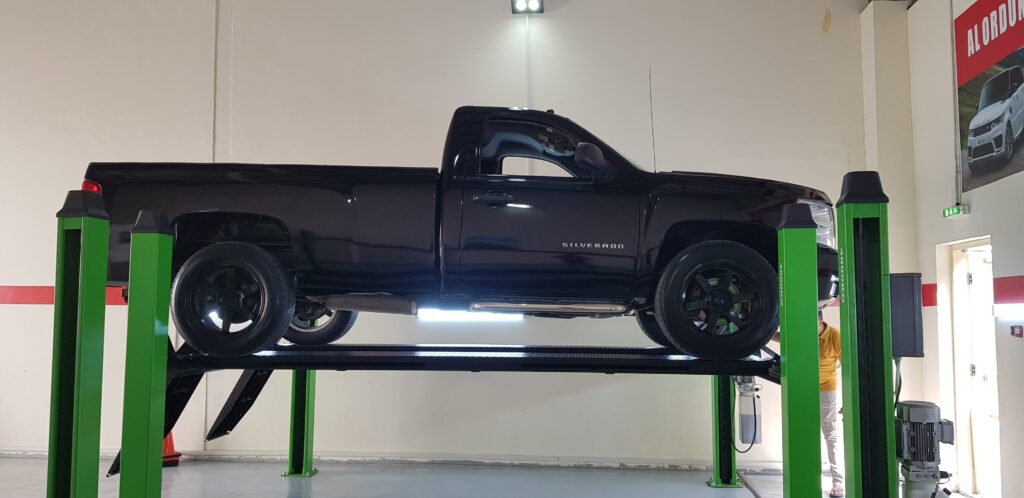
- Use a lift, or raise the car safely (with axle stands, not just a hydraulic jack), to inspect the lower parts.
- Look for cracks or bends in the car’s structure or exhaust system.
General Tips for Engine and Chassis Inspection:
- If you are not sure about a check, consult a professional mechanic.
- Carry out a regular inspection every 6 months, or as the owner’s manual recommends.
- Always take care when working under the car, and use safety equipment such as gloves and protective glasses.
By carrying out these checks regularly, you can avoid sudden faults and keep your car performing well for longer.
- Carbon and Combustion Testing: Why It Matters for Protecting Your Car’s Engine
- Tips for Inspecting Your Car Effectively in the UAE: A Complete Guide to Your Vehicle’s Safety
- Car Inspection in the UAE: A Complete Guide to Your Vehicle’s Safety and Performance
For vehicle registration and renewal requirements in the UAE, you can visit the official website of the Roads and Transport Authority (RTA).