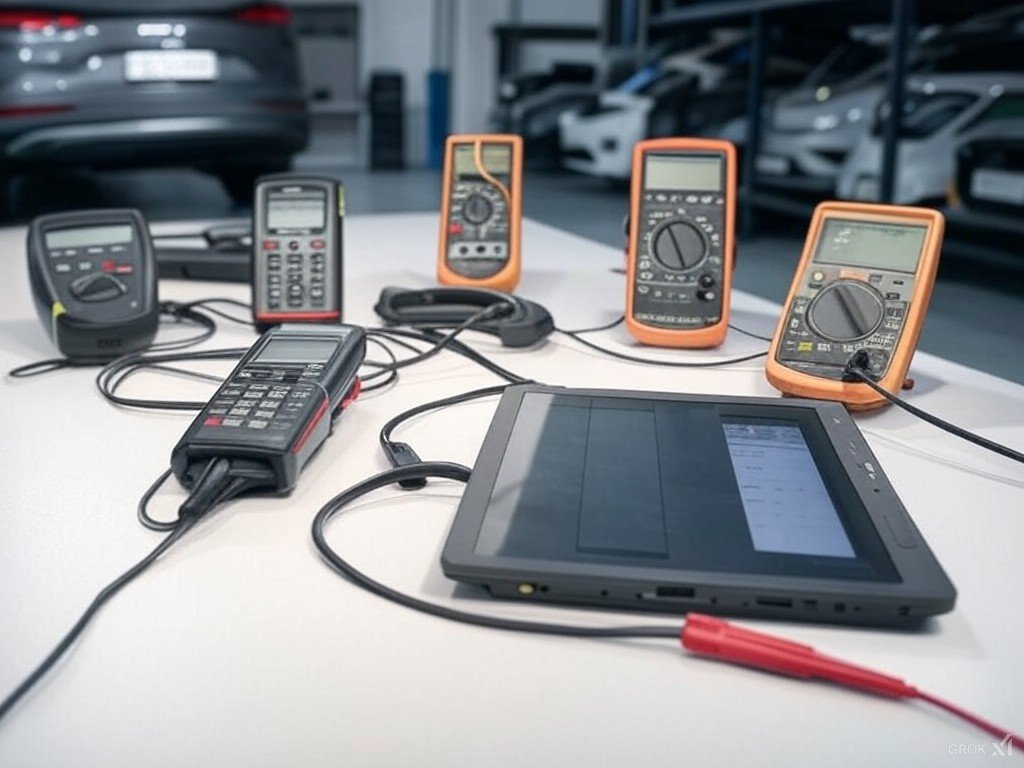
Computer-based car diagnostic devices are essential tools for vehicle maintenance and fault diagnosis. Because they rely on advanced technology, mechanics and specialists can find hidden problems. They also reveal faults that may not be visible to the naked eye. In general, these devices work by connecting to the car’s electronic control unit (ECU). They then read and analyse performance data, diagnose faults and suggest ways to repair them.
How Do Car Diagnostic Devices Work?
Car diagnostic devices rely on the OBD (On-Board Diagnostics) port, which lets them read the fault codes stored in the memory of the electronic control unit. The devices usually connect through an OBD-II cable, or through wireless technologies such as Bluetooth or Wi-Fi. They then send the data to the device’s screen, or to an app on a smartphone or computer.
Therefore, once connected, the device analyses a lot of information, such as:
- Fault codes (DTCs – Diagnostic Trouble Codes): First, they identify the faults recorded in the different systems.
- Engine performance and fuel consumption: They also help you find out how efficient the engine is and what causes higher fuel consumption.
- Air and exhaust sensors: Likewise, they reveal how well the exhaust system works and how harmful the emissions are.
- Battery and alternator condition: They monitor the voltage and the charging system.
- Brake system (ABS) and electronic power steering (EPS) checks: Finally, they help ensure safe driving and efficient brakes.
Types of Car Diagnostic Devices
🔹 Handheld Scanners:
These are standalone devices with a display screen and control buttons. Therefore, you can use them directly, with no need for a phone or computer.
🔸 Devices connected to a phone or computer:
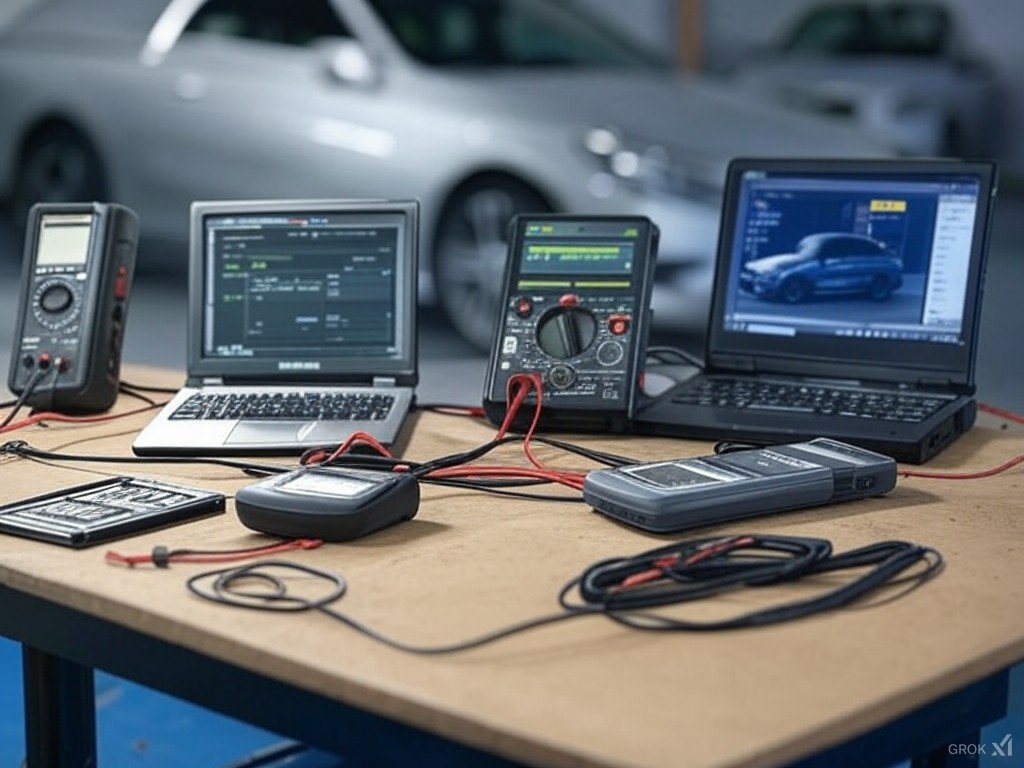
They rely on smartphone apps or computer software to show the data. They also usually connect through Bluetooth or Wi-Fi, for example ELM327 OBD-II devices.
🔹 Professional Diagnostic Tools:
These are used in large service centres. In addition, they offer advanced features such as reprogramming electronic modules and running live tests on the different systems.
The Main Features These Devices Offer
Detecting faults with high accuracy.
They also read and clear the fault codes stored in the car’s memory.
Analysing engine performance and fuel consumption.
After repairs, they reset the car’s systems.
Running live tests on the different systems while they operate.
As a result, they save time and money through early fault diagnosis.
Why Is a Computer Car Inspection Necessary?
- Saving money and time: The inspection finds small faults before they get worse and cause greater damage.
- Improving performance: You can also improve the car’s performance by analysing engine data and fuel efficiency.
- Ensuring safety: In addition, finding faults in the braking, steering and stability systems helps prevent possible accidents.
- Easier maintenance: Finally, regular checks show which parts need routine maintenance.
The Best Car Diagnostic Devices on the Market
For example, the Autel MaxiCOM MK808 is ideal for professional technicians, with advanced programming options.
Likewise, the Launch X431 V Pro covers a wide range of cars and has an easy-to-use interface.
The BlueDriver OBD2 Scanner, on the other hand, is a wireless device that connects to a smartphone to analyse car data in depth.
Finally, the FOXWELL NT301 is easy to use and suits car owners who want to track their vehicles’ performance.
- Car Inspection With the Latest Equipment and Full Reports
- Computer Car Inspection at Jordan Car Inspection Center
- About Computer Car Inspection Centres: Your Complete Guide
To learn about vehicle registration and renewal requirements in the UAE, visit the official website of the Roads and Transport Authority (RTA).